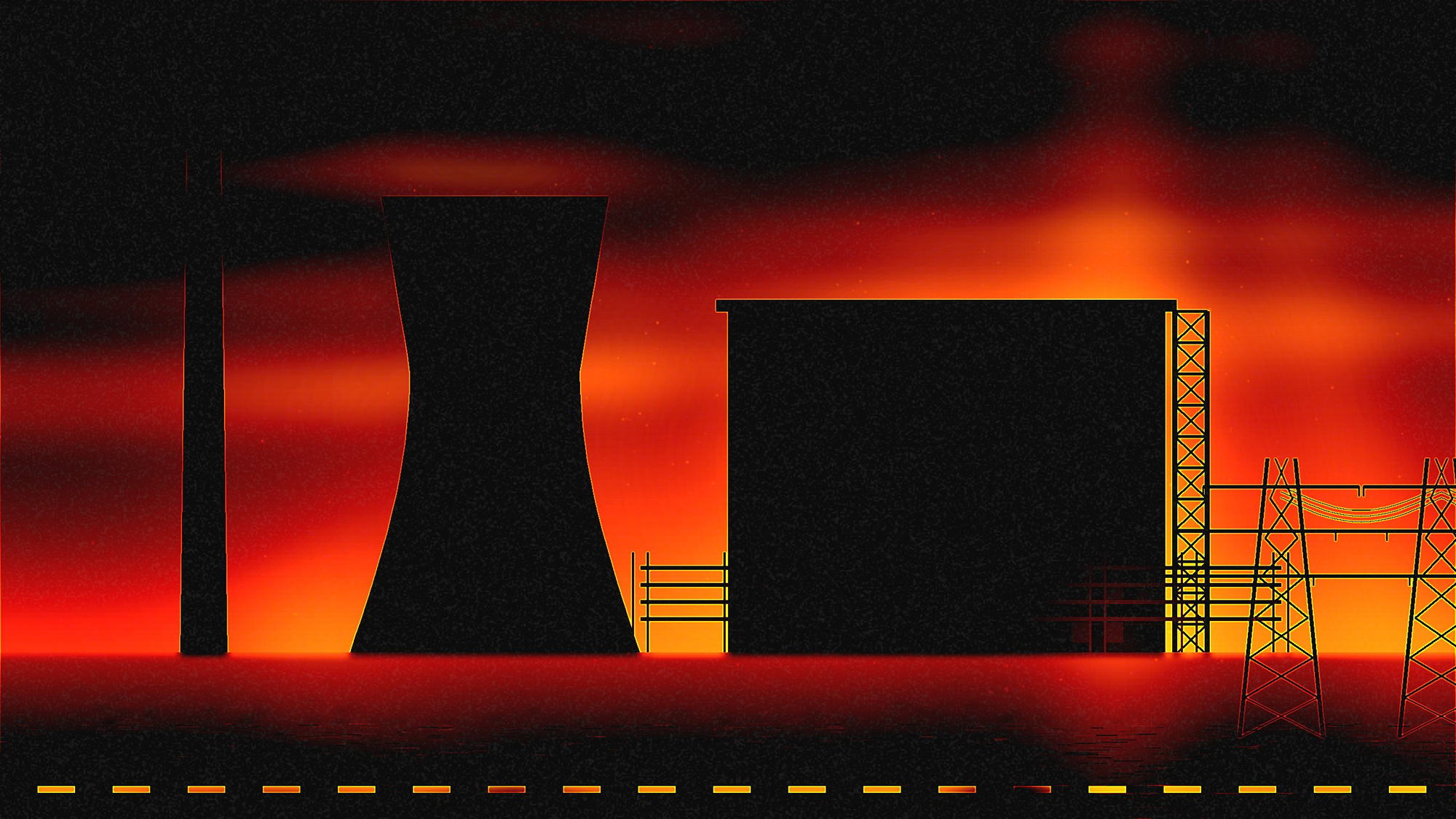
A retired thermal power station in Maharashtra required demolition of two boiler houses and a 120-metre reinforced concrete chimney. Sixty metres from the chimney base sat a 220 kV switchyard that could not be de-energised at any point in the programme.
Why explosive felling was rejected
Explosive felling is genuinely the right method for many tall isolated stacks — it is fast, it is well understood, and it concentrates risk into a single controlled moment rather than distributing it across months of working at height.
It was rejected here on exclusion distance. A 120-metre chimney requires a felling corridor and a debris exclusion radius that could not be established without encompassing switchyard structures. Beyond the physical debris envelope, the dust plume from an explosive collapse carries conductive particulate, and a flashover across energised 220 kV equipment would have produced a regional supply event.
The selected method
Top-down mechanical demolition using a platform-mounted crusher working from inside the chimney shell. Material was reduced progressively at the crown and dropped inside the flue, with every fragment landing within a twelve-metre radius of the base.
Vibration transmission was negligible compared to explosive felling — a decisive factor, since the switchyard foundations shared ground conditions with the chimney base.
Managing a structure that was already leaning
The chimney had a documented lean of 340 mm at the crown and internal flue liner deterioration. That combination meant the shell could not be assumed to behave as designed as material was progressively removed from the top.
Continuous survey monitoring tracked the lean throughout demolition with defined stop criteria at 15 mm additional movement. Switchyard foundations were separately monitored for vibration against a threshold agreed with the utility's transmission engineers.
- Chimney reduced from 120 m to base over eleven weeks
- Maximum recorded additional lean: 6 mm, well inside the stop criterion
- Zero vibration threshold exceedances at the switchyard boundary
- Zero dust threshold exceedances at boundary monitors across eight months
- Zero switchyard outages caused across the full programme
The fast method and the correct method are frequently different. The engineering exists to establish which one you are actually looking at.
DDMS Global Projects
Project Engineering
30 April 2026 · 8 min read